
Unlocking Japan: Minpaku Rentals for Airbnb
Quick summary
1. Introduction: 3 types of accommodation business in Japan
2. Special Zone Minpaku
3. Management Entrustment for Owner-Absence Situations
Over the last few years, Japan’s “minpaku” (private lodging) market has rapidly evolved, driven by both legislative changes and surging inbound tourism. Three main legal structures govern the short-term accommodation business:
- The Hotel Business Act (Ryokan Gyouhou) – originally for hotels and ryokans but can include certain short-term rentals.
- The New Private Lodging Act (Minpaku Shinpo) – a national regulation specifically for private lodging.
- The Special Zone Minpaku (Tokku Minpaku) – arrangements approved within designated “National Strategic Special Zones,” offering more relaxed conditions compared to the standard Minpaku Act.
Operating a private lodging in Japan requires compliance with one of the following frameworks (though local ordinances and zoning rules also play a decisive role). Below is the Comparative Table of Minpaku Regulatory Frameworks—presented in its simplified form, with minimal text in each cell, as per the request to omit detailed commentary from within the table itself.
Comparative Table of Minpaku Regulatory Frameworks
| Hotel Business Act | New Private Lodging Act | Special Zone Minpaku | |
|---|---|---|---|
| Permit | Permission | Notification | Certification |
| Limit on number of operating days | None | Up to 180 days per year | At least 2 nights/3 days (No annual limit) |
| Guest room area | Generally ≥ 33㎡ (or 3.3㎡ × no. of guests) | 3.3㎡ × number of guests | Generally ≥ 25㎡ |
| Briefing session for nearby residents | Not required | Required | Required |
| Need for management outsourcing | None | Required if ≥6 rooms or owner is absent | No specific regulation |
| Fire safety equipment standards | Required | Required | Required |
| Information sharing with foreign tourists | Preferable if possible | Required | Required |
| Operation in exclusively residential zones | Not allowed | Allowed (may be restricted) | Possible (may have local restrictions) |
Key Observations (outside the table):
- Under the Hotel Business Act, you need a formal license, similar to hotels or ryokans. No limit on operating days, but the facility standards can be more stringent.
- The New Private Lodging Act enforces a 180-day operating limit per year at the national level and requires notification instead of a full hotel license. Some local governments impose further restrictions.
- Special Zone Minpaku rules vary among local governments. Minimum stay requirements often apply, but generally there’s no cap on the total number of annual operating days.
In practice, many hosts gravitate to the New Private Lodging Act or Special Zone Minpaku if they intend to open smaller-scale or part-time operations. Larger enterprises or those seeking to emulate a full hotel may still go the Hotel Business Act route, though it involves more exhaustive compliance measures.
Section 2: Special Zone Minpaku – Trends and Data
Special Zone Minpaku emerged through the Japanese government’s “National Strategic Special Zones” policy, which encourages local authorities to tailor regulations to boost tourism and economic activity. Here is the data on how many facilities, rooms, and business operators have been certified under special-zone regulations in certain municipalities. The table, as of May 31, 2024, is reproduced below.
Special Zone Minpaku Trends – Results (as of May 31, 2024)
| Local Government | Date of District Plan Recognition | Certified (Facilities) | Certified (Rooms) | Certified (Business Operators) | (Of Which are Individuals) |
|---|---|---|---|---|---|
| Tokyo Ota Ward | October 20, 2015 | 178 | 472 | 151 | 62 |
| Chiba City | December 15, 2017 | 1 | 1 | 1 | 1 |
| Niigata City | May 22, 2017 | 3 | 3 | 3 | 2 |
| Kitakyushu City | October 4, 2016 | 3 | 5 | 3 | 2 |
| Osaka Prefecture | December 15, 2015 | 26 | 57 | 26 | 8 |
| Osaka City | April 13, 2016 | 4,635 | 13,517 | 2,655 | 977 |
| Yao City | — | 2 | 3 | 2 | 1 |
| Neyagawa City | — | 2 | 2 | 2 | 1 |
Interpreting the Numbers
- Tokyo Ota Ward was a pioneer in allowing private lodging near Haneda Airport. Its relatively high number of facilities reflects robust traveler interest and local government support.
- Osaka City stands out with thousands of certified facilities, indicative of its booming inbound tourism, especially from Asia.
- Smaller municipalities like Niigata or Kitakyushu have only a few certified facilities, possibly due to more limited tourism demand or stricter local requirements.
- Notable is the “Of Which are Individuals” column, showing how many private citizens, rather than corporations, have managed to obtain certification. In Osaka City, nearly a thousand owners are individuals, suggesting a vibrant ecosystem for non-corporate players—an encouraging sign for foreign operators wishing to run a minpaku independently.
Section 3: Management Entrustment for Owner-Absence Situations
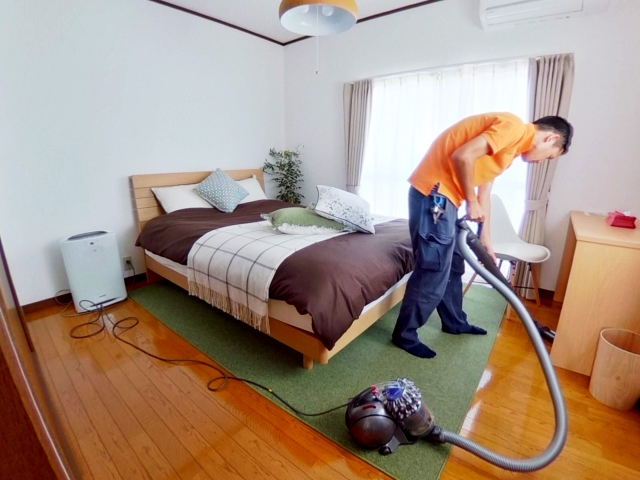
A significant factor for foreign owners is how to handle operations if you are not physically present in Japan. Here is the rules and differences between Special Zone Minpaku and the New Private Lodging Act regarding “absentee ownership.” Below is a streamlined, revised explanation suitable for non-Japanese operators.
3.1 Special Zone Minpaku: No Special Rules for Absent Owners
In Special Zone Minpaku frameworks, there is typically no explicit requirement to entrust daily operations (cleaning, check-ins, guest communication) to a licensed management company if the owner is absent. You are free to self-manage if you can somehow handle emergencies, cleaning, and neighbor relations from afar.
However, self-managing from outside Japan can pose practical challenges:
- Emergency Response: If a guest locks themselves out or experiences a medical issue, who will respond locally?
- Cleaning and Turnover: Maintaining consistent quality may be difficult without a local partner.
- Neighbor Complaints: Noise, trash disposal, and parking concerns require immediate attention to keep community relations positive.
For that reason, even though Special Zone rules are relatively lenient about self-management, many absent owners voluntarily hire a professional “operation agency” (運用代行業者) to maintain smooth operations and compliance.
3.2 New Private Lodging Act: Mandatory Outsourcing When Absent
Under the New Private Lodging Act:
- Obligation to Entrust: If you, as the host, do not reside on the property (so-called “owner-absentee” minpaku), you must outsource management tasks—such as guest check-in and complaint handling—to a registered “Residential Accommodation Management Company” (住宅宿泊管理業者).
- Single Entity Rule: The law stipulates that you must entrust all these duties to one licensed company. You cannot split them between multiple vendors or handle part of them yourself if you are not on-site.
- Re-Entrustment: The single company you hire can subcontract a portion of the tasks (e.g., cleaning or key exchange) to other specialists. From the perspective of government compliance, however, your contractual relationship must be with just one official management operator.
This approach intends to ensure a clear chain of responsibility and accountability. Even though you outsource operational duties, you remain responsible for higher-level compliance—keeping the property safe, sanitary, and in harmony with the local community.
3.3 Core Responsibilities of the Owner
Whether under Special Zone Minpaku or the New Private Lodging Act, you cannot fully divest yourself of legal obligations. As the recognized “housing accommodation business operator,” you must:
- Maintain Hygiene: Ensure regular cleaning, proper waste disposal, and sanitary conditions.
- Ensure Safety: Install fire safety equipment, label exits clearly, and provide emergency instructions.
- Offer Comfort for Foreign Guests: Since many minpaku users are international travelers, consider multilingual guides and instructions.
- Keep Guest Records: Under Japanese law, you must keep a guestbook and verify passports for foreign guests.
- Prevent Neighborhood Issues: Provide house rules about noise, garbage days, and local norms. Promptly address complaints.
- Provide Complaint Resolution: Have a clear system (often via your management company) to handle neighbor or guest complaints quickly.
3.4 Balancing Professional Management vs. Self-Management
- Pros of Outsourcing:
- Professional managers have local knowledge and can respond quickly to emergencies.
- Better reviews and occupancy rates often follow high-quality management, including seamless check-in and cleanliness.
- Reduces the language barrier for foreign owners.
- Cons of Outsourcing:
- You pay a management fee, typically a percentage of your revenue or a fixed monthly rate.
- You lose some direct oversight of daily operations.
In Special Zone scenarios, outsourcing is optional but recommended for foreign owners who do not reside in Japan. In the New Private Lodging Act context, it becomes a legal requirement if you are absent. Hence, many foreign investors or homeowners simply opt for a trusted agency to minimize legal and logistical complications, focusing instead on the strategic side of the business.

Japan’s minpaku sector continues to grow, fueled by the country’s strong inbound tourism and the rise of alternative lodging platforms. However, tapping into this lucrative market requires a solid grasp of the different legal frameworks. For foreigners looking to launch a minpaku business, the crucial steps include verifying local zoning laws, establishing a reliable management system (particularly if you do not reside in Japan), and respecting community norms. Those who navigate these requirements effectively can offer travelers an authentic and comfortable stay, build positive neighborhood relations, and reap the rewards of Japan’s robust tourism industry. By understanding the core differences between national and local rules and ensuring you have a sound operational strategy, you can create a sustainable, profitable lodging venture that benefits both guests and the local community.
Looking for the perfect property in Japan? Let us help you find it! Feel free to reach out via our contact form. We provide comprehensive support from property search to finalizing the purchase contract.